Long awaited Luis Robert Jr. trade has arrived. The Mets announced that they have acquired the former All-Star center fielder from the White Sox for a youngster Luisangel Acuña and a minor league right-hander Truman Pauley. There is no money involved and no moves involved because Robert and Acuña were each on the 40-man roster.
This ends what has been years of Robert trade rumors. The White Sox have held onto their center fielder for several rebuilding seasons. In retrospect, they really wish they had moved him for the 2023-24 season. Robert was coming off a career year and looked like a rising star entering the prime of his career. The last two seasons have been a big challenge, as he has dealt with injuries and used to attack while asking a lot of questions about when he will be traded.
Robert was a top prospect when he signed with the Sox out of Cuba in 2017. He ordered a cheap $26MM bonus, the kind of large international scholarship that would be prohibited in the collective bargaining agreement. Robert’s minor league performance fueled optimism, and the White Sox signed him to a $50MM extension through the 2019-20 offseason. At the time, it was the largest extension for a player required to make his MLB debut, and it ensured he would break camp in 2020 without any form of service time.
While that year’s program was cut short by the pandemic, Robert hit 11 home runs and won the Golden Glove in center field. He finished second in Rookie of the Year voting. Robert’s numbers took off in year two, as he hit .338/.378/.567 in 296 plate appearances. A torn hip flexor tendon in his right hip cost him three months, however, and the combination of attractive talent and frustrating toughness would become a recurring theme in his career.

Robert had three characters on the injured list, albeit all minor issues, the following season. He stayed healthy for most of the ’23 campaign and showed his star-level ceiling at full strength. Robert hit 38 homers, 36 homers and one triple in 595 plate appearances. He hit .264/.315/.542 to win the Silver Slugger Award. FanGraphs and Baseball Reference each valued his season at nearly five wins above replacement after accounting for his center field defense.
The White Sox however went 61-101 and were knocked out by 200 runs on the season. It became clear that they were in the middle of a multi-year dispute, but chose to stick with Robert when they had four years of affordable contract control. They could get a lot of top prospects if they were to buy him.
Robert’s production has declined as the team has gone through two of its worst seasons. He hit .223/.288/.372 in 856 games since the start of 2024. He shot around 30% while continuing to battle injuries. A sprained right hip early in the ’24 season kept him out for two months. A left hamstring strain was a factor last summer, and it cost him all of September.
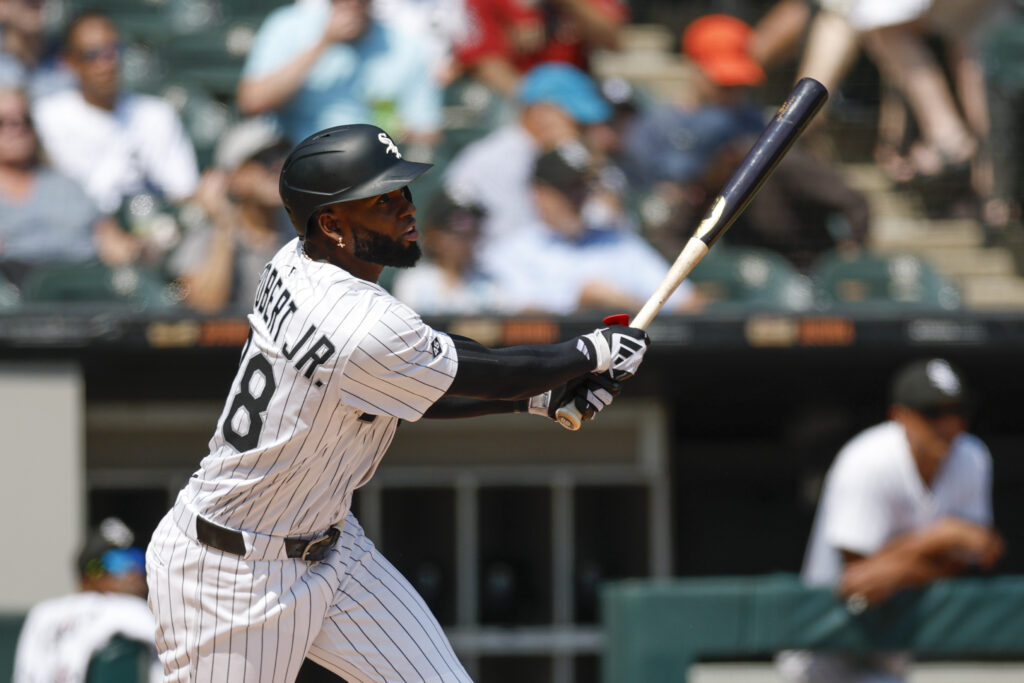
Physical tools are always encouraging. Robert is still one of the fastest players in the league despite various lower back injuries. He ranks in the 92nd percentile among hitters in bat speed, according to Statcast. He is an aggressive hitter who will always have his share of hits. Teams can happily live with a lower percentage if he makes the kind of power and defensive impact he did in his best days in Chicago.
Mostly a change-of-scenery bet from the Mets’ point of view. Robert just turned 28 in August and has shown no signs of slowing down. He spent the last three seasons on one of the worst teams in the MLB, knowing full well that he would be traded at some point. A new environment could help him get back on track, though fitness concerns will continue even if his numbers improve.
Robert will at least improve the defense and bring in some opposite fundamentals. He stole 20+ bags in three straight seasons and went 33-41 on stolen base attempts last year. He should also carry the juice against left-handed pitching, as he is a career .293/.367/.505 hitter with the team advantage. His production against southpaws peaked in 2024 but rebounded last season.
The Mets’ biggest risk is financial. They took all of Robert’s $20MM salary and committed to a $2MM buyout of the same club option for the 2027 season. That’s not a small amount to spend on a player who hasn’t produced much in the last two years, and that’s before the tax impact is factored in.
The Mets pay a 110% tax on spending as a luxury taxpayer three times his CBT salary of over $304MM. Robert is guaranteed $22MM for one season – a guaranteed buyout option – so they get a $24.2MM tax hit for the move. The commitment is $46.2MM in total, though that comes with the top of what would be a bonus option in ’27 if Robert hits his ceiling. RosterResource calculates their CBT number at about $357MM, putting them on pace to surpass last year’s year-end mark of $347MM, which required a tax payment of $91.6MM. There’s a good chance they’ll get a tax hit north of $100MM at the end of the ’26 season.
They took on $64MM in AAV obligations for the 2026 season between trading Robert and Bo Bichette signing five days ago. The Mets don’t want to lock themselves into long deals one season after the season Juan Soto signing, so compensate them with a short-term investment to chase. Robert should be an everyday center fielder as long as he stays healthy. That will push Tyrone Taylor either in the fourth outfield role or as a shortstop in left field if prospects Carson Benge again Jett Williams open the season in Triple-A.
Although the White Sox missed out on their chance to trade Robert for a high price, they deserve credit for using this year’s $20MM option instead of letting him go for free. That at least gives them depth with multiple positions in Acuña, who feels like a misfit for the Mets but is a target for a rebuilding team.
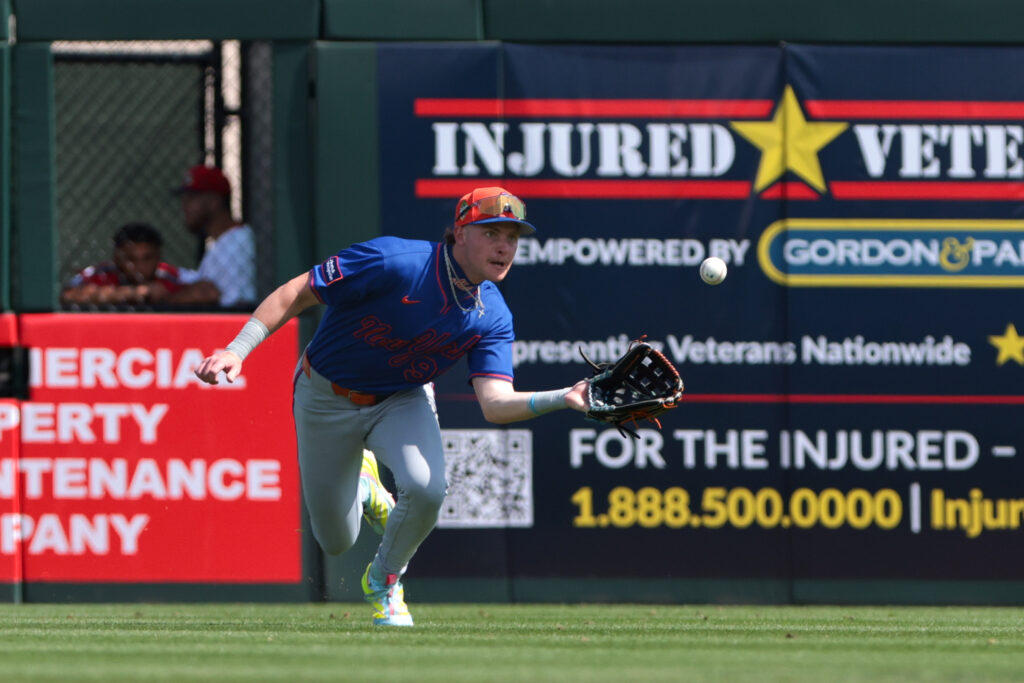
Younger brother of Ronald Acuña Jr.Luisangel is a former Rangers signee who was acquired by the Mets in 2023 Max Scherzer agreement deadline. His pedigree and previous involvement in the one-man trade has made him more popular than his production warrants, but he is not yet 24 years old and provides multi-positional support for captain Will Venable.
Acuña signed as a shortstop and has the arm strength to profile in left field. There weren’t many shortstop reps available on an MLB team with Francisco Lindorleading the Mets to bounce him for workload. Acuña has plus-plus speed and could be an option in center field as well. He splits his time between shortstop and center field in the Venezuelan winter league, but most of his MLB experience has come as a second baseman.

The White Sox shouldn’t have a problem putting Acuña on the roster even if he isn’t expected to pitch. Colson Montgomery off shortstop. He can step into the everyday outfield role vacated by Robert’s trade or push second/third base playing time to the side Chase Meidroth, Miguel Vargas again Lenny Sosa.
The question is whether Acuña will bring enough to the table offensively to warrant everyday playing time once the Sox are better positioned to compete. He is a .248/.299/.341 hitter in his first 233 MLB plate appearances. Acuña had the same easy bat even against Triple-A pitching. The right-handed hitter owns a .265/.307/.360 line in over 700 trips to the plate at the minor league level. Acuña has strong contact skills but puts a lot of balls on the ground without great exit velocity. He’s a slash-and-dash type hitter whose current best ability is as a runner, where he went 16-17 in stolen base attempts in 95 MLB games last year.
Acuña is out of the minor league league, so the White Sox will need to keep him on the MLB roster. They wouldn’t trade Robert for him if they didn’t intend to. The lack of roster flexibility was the biggest hangup for the Mets, who also couldn’t pick Mark Vientos and it is impossible to send Brett Baty back to Triple-A. They knew they would lose Acuña to waivers if they didn’t trade him, but they also weren’t in a position to give him playing time to take a step forward offensively. Chicago can control him through the 2031 season, as Acuña has yet to reach a year of MLB service.
The White Sox also added a minor leaguer in Pauley, a 6’2″ righty the Mets took in the 12th round of last year’s draft. The Harvard product received a $400K over-the-slot signing bonus. Baseball America ranked him the #435 prospect in the draft, writing in June that teams liked the pitching life of his mid-90s fastball and spin rates on his breaking ball. Pauley walked over 15% of opponents with a 4.61 ERA in his draft year. His command will need to take a significant step if he’s going to reach the majors, even relief, but the Sox’s player development team is clearly interested in his raw material.
From a salary perspective, dealing Robert lowers Chicago’s projected spending to $67MM. They opened last season with about $81MM in cap space, so this could free them up to gain a season or two of depth. The Sox could bring in a veteran middle reliever and/or fourth baseman that they could try to convert for another lottery ticket prospect in Pauley’s mold at the deadline.
ESPN’s Jeff Passan was first in terms of the trade. Jon Heyman of the New York Post reported that the Mets were taking the full salary. Subsequent images courtesy of Kamil Krzaczynski, Jay Biggerstaff of Imagn Images.