The Rays have new owners and the biggest job is to build a new stadium. Last month it was reported that the club signed a non-binding agreement to cooperate with the board of managers at Hillsborough College as the group is still studying at the Dale Mabry faculty of this college. More details on possible next steps were discussed this week, as revealed in Tampa Bay Times columns by Marc Topkin, Nicolas Villamil, and Nina Moske, Villamil, Lucy Marques, and Topkin. The club also released a proposed site offer today, according to Topkin.
The club is planning a 113-acre mixed-use development, which will include a stadium but also other real estate features, comparable to The Battery in Atlanta. The sticker price is around 2.3 billion, the club is willing to pay about half, while asking for public funding to cover the other half. The club will be primed for running, maintenance and repair. That sticker price is only in the ballpark. The team is reportedly willing to invest $8 to $10 billion in the mixed-use area surrounding the ballpark. Florida Governor Ron DeSantis said recently that the land will be transferred to the college to discuss its use.
With the grant application, there is a threat of deportation if it is not done. “You know Orlando wants this,” DeSantis said this week. MLB commissioner Rob Manfred was less specific but also seemed to emphasize the urgency of the situation. “It’s time to ask a question here,” said Manfred. “There are other options in Florida,” he added. “We are at a high point in the club’s history that something needs to be done.”
This is often the case when the team is looking for public money to fund the stadiums. Sometimes, the threat is real, as Athletics fans know. The OA couldn’t get a funding deal to build a new stadium in Oakland and decided to move to Las Vegas. The threat may also be ineffective. Royals owner John Sherman recently floated the idea of the club leaving town. He admitted that he was counseled to voice those fears in an attempt to sway the vote.
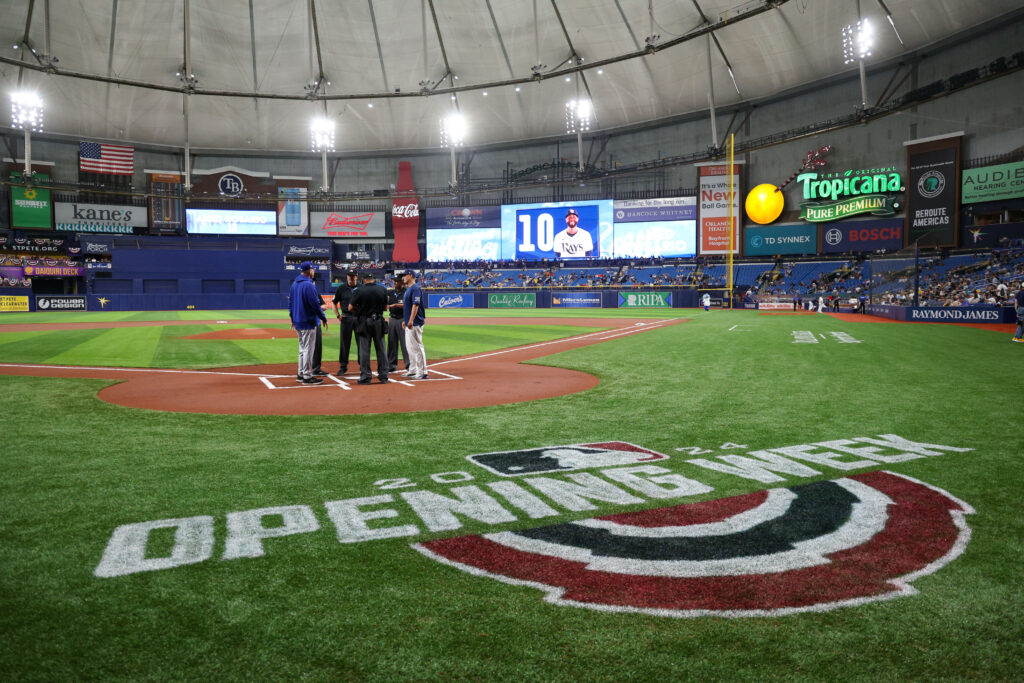
The Rays’ pitching pursuit has been ongoing for years. Previous owner Stu Sternberg pursued options within Tampa in Hillsborough County, as well as in St. Petersburg in Pinellas County, the latter being the current home of the Rays’ longtime home at Tropicana Field.
Not long ago, Sternberg had an agreement with St. Pete and Pinellas to finance a plan that will include the construction of a new stadium in the area where the Trop currently resides. The Rays would pay for about half of that project with public funding covering the rest. That’s the same framework being considered now, although the sticker price of the previous deal was $1.3 billion, about half of the current proposal.
Storm damage to The Trop in late 2024 led to disagreements about how to move forward, and the deal was eventually scrapped. The relationship between Sternberg and local government officials was often seen as unfavorable, leading him to sell out to a group led by Patrick Zalupski.
The new ownership group is working on tight deadlines. The Rays did not play at The Trop in 2025 due to the aforementioned damage, playing at a minor league park instead. The Trop is expected to be ready for use again in time for the opening day of 2026 but the club’s lease will expire in 2028. Getting the money for a new stadium up and built over the next three years will be a challenge, especially with government officials seemingly reluctant to get on board.
Tampa Mayor Jane Castor has always spoken out against the possibility of city funds being used for the stadium. Hillsborough County commissioners voted unanimously this week to pursue stadium negotiations with the club, but many commissioners expressed concern about using tax dollars to fund the stadium.
“We promised everyone on the public record that the CIT (Community Investment Tax) numbers will not be relevant,” said commissioner Joshua Wostal regarding the financing of paid sports stadiums. “We haven’t even started collecting that tax, here is the suggestion that we are already deceiving the taxpayers that we promised less than two years ago.” If CIT is a sticking point, that would be important.
“This deal doesn’t happen without CIT,” said commissioner Ken Hagan, the promoter of the deal with the Rays. “It’s impossible.” The Rays also proposed that the funding come from a visitor tax on hotel rentals and stays, property tax revenue assessed on the area near the stadium, money for hotel expenses near the stadium and infrastructure bonds issued by the community development district.
Development in Central Florida is obviously important to the Rays but also to the rest of the league. Manfred has long said that he would like to see football continue to grow from 30 to 32 teams before his contract expires in January 2029. He also said the expansion won’t take effect until the A’s and Rays have their future homes. The A’s are building a new stadium in Vegas with an opening scheduled for the start of the 2028 season.
The aforementioned memorandum of understanding gives Hillsborough College an exclusive negotiating window with the Rays for 180 days. It is unclear what happens if no agreement is in place after that period ends.
Photo courtesy of Nathan Ray Seebeck, Imagn Images