The reigning champions have not been a busy team this winter but the moves they have made have had an impact and have addressed their weaknesses. They enter 2026 looking for a three-peat, something not seen in MLB since the 1998-2000 Yankees.
Major League signing
2026 spending (not including Ibáñez): $90MM
Total spent (excluding Ibáñez): $325.5MM
Trade and Applications
Selection Decisions
Notable Minor League signing
- Nick Frasso, Chuckie Robinson, Nick Robertson, Ryder Ryan, Cole Irvin, Seby Zavala, Jordan Weems, Keston Hiura, Santiago Espinal, Yency Almonte, Keynan Middleton
Extensions
Significant Loss
The Dodgers entered the offseason in a good place. The lineup was strong enough to win the World Series for the second year in a row. Their free agent phase mostly consisted of relievers and role players, so no big holes opened up.
President of baseball operations Andrew Friedman addressed the situation in December, speaking with Bill Plunkett of the Orange County Register. He admitted that the club had less work to “raise” the work than in previous games.
He pointed to the outdoor area and the stars as places they can add to but he also said that they can see that the list is growing as many stars are in their 30s. It was actually the oldest club in the league by 2025. Going forward, it would make sense to sign a few long-term deals and bring in more young prospects. But at the same time, winning with their legendary core is a short-term priority.
Although the Dodgers emerged victorious in 2025, they were not perfect and were nearly eliminated several times. Manager Dave Roberts seemed to have no confidence in the relief pitchers, so he relied more on his starting pitchers as the season progressed.
The outfield was also weak. Teoscar Hernández he often makes up for his defensive shortcomings but was league average offensively in 2025. Andy Pages had a great year but it snowed in the playoffs. Michael Conforto it was enough to be left off the postseason roster. Tommy Edman he is battling an ankle injury that will eventually require surgery.
In pursuit of the bullpen, there were a number of high-profile releases available in free agency. The Dodgers were linked to the boys Devin Williams, Pete Fairbanks, Raisel Iglesias again Robert Suarez. Finally, surprisingly they found the top guy in the market, who got it Edwin Díaz on a three-year contract worth $69MM.
Diaz is about to turn 32 and still isn’t playing like he was a few years ago, but he’s still one of the best relievers in the game. He posted a 1.63 earned run average for the Mets in 2025, striking out 38% of the batters he faced.
Many expected Díaz to stay in Queens, as the Mets also needed to deal with their bullpen and were one of the few clubs with the same spending power as the Dodgers. It would later be revealed that the Mets had offered him a three-year, $66MM contract. Considering the modest discount on the deal Díaz received from the Dodgers, the two offers were very close to matching. Some reports said the Mets were willing to move up but were caught off guard when he quickly agreed with the Dodgers before they did.
Diaz reportedly received a five-year offer from Atlanta, although the dollar amount was not disclosed. Presumably, it would be a lower average annual price than the three-year offers he received from the Dodgers and Mets.
Perhaps he wanted to break his record AAV for a reliever, which was $20.4MM in his previous deal. The Dodgers deal, even including the waivers, is worth about $21.1MM per year. Maybe he just wanted to join baseball’s premier organization. At Edwin’s introductory press conference, he said his brother Alexis spoke highly of the Dodgers after spending a short time with them in 2025, per MLB.com’s Sonja Chen.
Whatever the reason, the Dodgers added an elite closer to their already strong club, just before the holiday break. Later in the winter, they would also return Evan Phillips for a much smaller deal worth $6.5MM. He is recovering from Tommy John surgery and won’t be available until the second half, but he could give the Dodgers another bullpen boost for an extended run and the playoffs.
As the calendar turned to 2026, the foreign market was less volatile. Two top free agents, Kyle Tucker again Cody Bellingerthey were both still out in January. With the holidays winding down and teams getting back to business in January, the Tucker market quickly picked up steam.
Tucker seemed to have clear, distinct options. The Blue Jays were offering a traditional long-term deal that would cover the remainder of Tucker’s career. They reportedly rose to $350MM in ten years. That was the closest match to MLBTR’s 11-year, $400MM prediction and would have been one of the ten highest guarantees in MLB history.
The Mets and Dodgers are bidding again and offering Tucker a different option. Both clubs were eager to avoid that kind of length and were willing to put together some short-term money. Taking this approach would mean Tucker is a little defensive overall but could get big money over the next few years, with the opportunity to return to free agency to do more later on.
Players love it Matt Chapman, Blake Snell, Cody Bellinger, Alex Bregman, Pete Alonso and others have taken this approach in free agency before but Tucker was being offered a premium version of it. The Mets reportedly went for $220MM over four years, with exits after the second and third years. The Dodgers moved up slightly to $240MM over the same four-year period, and exited after year two and year three. That did it.
There is some upside in Tucker’s deal, but also a huge signing bonus. The sticker price comes with an average annual price of $60MM. The postponement lowered the AAV but only slightly, as it was reported to be around $57.1MM in terms of competitive balance tax.
For all intents and purposes that was easily a new record. Shohei OhtaniTen years, the $700MM deal has $70MM AAV more, but a reputational reversal on that deal brought it down to $46MM. With that in mind, Juan Soto he owned the AAV record at $51MM before this Tucker deal.
It was a surprising number and could represent many different things to different people. For some, the offers from the Dodgers and Mets represent an economic imbalance that is untenable in the modern game. Both clubs repeatedly fall into the top CBT bracket, meaning they face a 110% tax rate on new deals. The Dodgers will effectively send $120MM to have Tucker on their team this year. That’s more than the entire salary of most players.
This has led to a growing demand for radical change in baseball’s rules, with many fans and team owners clamoring for salary compensation or drastic changes in revenue sharing rules. The Dodgers had already become public enemy number one in the eyes of many baseball fans by dominating the field and the offseason. Every new signing increases the angst and the Tucker deal made it difficult.
From the MLBPA’s point of view, this is proof of why there shouldn’t be a cap. If so many teams value Tucker so much that they’re willing to pay him $120MM a year, it’s a sign that the league is in solid financial shape overall. Even under the current rules, Tucker will get about half of his production on the field. The other part, tax money, will go to the league. Some of it will end up in the middle fund, some will be distributed to smaller groups like Guardian and the Marlins will not have the power to use it. In the eyes of many, that lack of urgency on other teams is a bigger problem than the Dodgers’ willingness to invest in a winning team.
It could also be a complete coincidence of circumstances. By all accounts, the Dodgers bring in all kinds of revenue, as one would expect from a successful club. But the star presence of their Japanese players also means they have a cash flow across the Pacific Ocean. As mentioned, they try to avoid the pitfall where they go through their current context and suddenly find themselves with an old and old list. They used their financial power to add Tucker the way they wanted.
In his opinion, Tucker is technically leaving money on the table but will have a good chance of getting it back, and then some. In the right financial situation for him, he spends his age 29 and 30 seasons playing for the best team in baseball. He’ll bank $120MM and could return to free agency looking for another deal before his age-31 campaign. If he can get $230MM from then on, he’ll make up the difference for what the Jays are offering. If the next collective bargaining agreement seems to make positive changes for the players, he could benefit from that.
There were a few other notable things in the Dodger’s offseason. There were trade rumors all around Teoscar Hernández again Tyler Glasnow but there never seemed much chance that either would budge. Max Muncy he got another year added to his contract. That’s a bit against the plan to avoid an aging roster, as Muncy will turn 36 this year, but he’s still very productive and just one more season guaranteed. Old friends Miguel Rojas again Enrique Hernández they were also signed to bench roles, although Hernández will start the season on the injured list.
The main story of the Dodger offseason is straightforward. They were already good in November, with few question marks around the bullpen and outfield. They signed the top free agent available in both of those areas. They did this while reducing their long-term commitments, as they wished. They’re raising money in a short period of time, RosterResource shows them a salary of $395MM and a CBT number of $405MM, but they’re doing well with that.
They enter 2026 as clear favourites. The Projected Standings at FanGraphs project 96 wins, which makes them eight more than any other club in the majors. The PECOTA Standings in Baseball Prospectus are even stronger, placing the Dodgers at 104, ten clear of any other team. Anything can happen in a tumultuous baseball season but organization is the league’s asset right now.
It is also possible that this off-season will have devastating consequences in ways that cannot be foreseen. Many say baseball is “broken” and point to the Dodgers as the culprit. The Tucker deal alone didn’t do the trick but some feel it may have been the proverbial straw that broke the camel’s back. A lot of fans are fed up and want a change. The collective bargaining agreement is expected to expire after this season. Lock out feels guaranteed and many expect it to be bad. Some even fear losing games, if not the entire 2027 season.
Time will tell on all that. For the 2026 Dodgers, they couldn’t have drafted it any better.
How would you rate the Dodgers season?
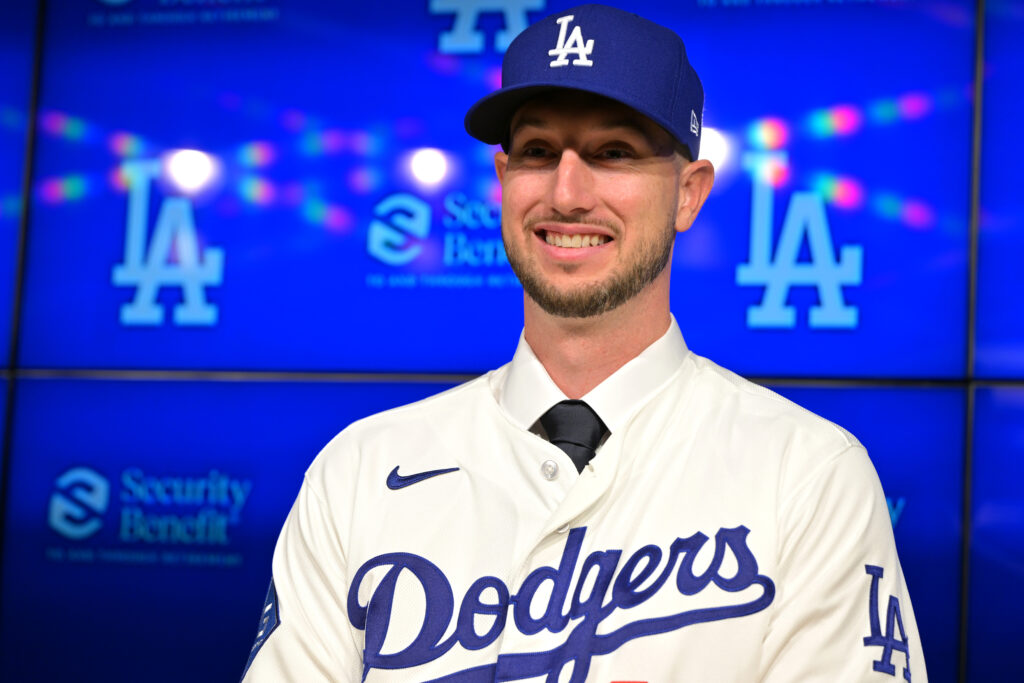
Photo courtesy of Jayne Kamin-Oncea, Imagn Images