Are Golf Simulators Accurate Enough To Really Improve Your Game? – Golf News

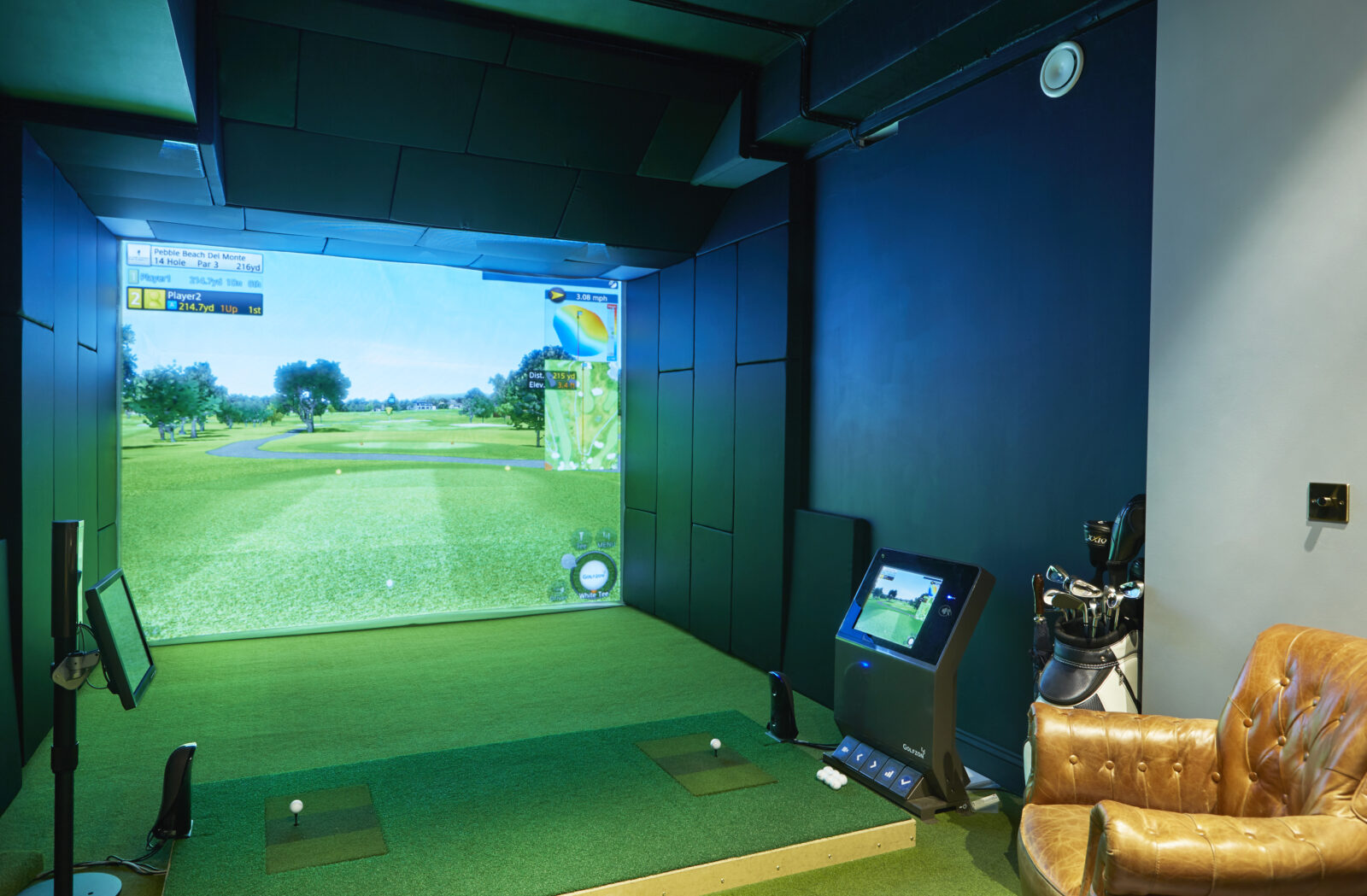
Golf simulators have come a long way from new entertainment. Walk into any indoor golf center today, and you’re looking at technology that measures ball speed, spin rate, launch angle, club path, and face angle in real time – all within milliseconds of a score.
That level of data was once reserved for travel professionals and relevant studios. Now available for weekend golfers who want to work on their swing during their Tuesday lunch break.
The question is not whether the simulators are impressive. Whether the data they generate is accurate enough to translate into real improvement in the actual subject.
How Technology Works
At the heart of every modern golf simulator is a monitor – a device that captures what happens and just after impact. Two main technologies dominate the market.
Radar-based systems, such as TrackMan, track the ball’s flight using Doppler radar. They follow the drop of the ball and work backwards to calculate the starting conditions. They are the best outside, where the ball travels far enough to produce reliable tracking data, and have been the standard on PGA Tour driving ranges for years.
Camera-based systems, such as the Foresight Sports GCQuad, take a different approach. High-speed cameras capture the ball within the first few centimeters of flight, measuring spin and opening angle directly from the image data rather than referring to the ball’s flight. This gives them a clear advantage indoors, where the radar has a smaller range of aircraft to operate.
Here’s a quick breakdown of how these technologies compare in performance:
| Radar (TrackMan) | Camera (Foresight) | |
| How does this work | Tracks the flight of the ball, calculates launch conditions | It measures directly by impact |
| The best place | Outside | Inside |
| Tracking the flight of the ball | Long distance, very detailed | Short range, focused on impact |
| Accuracy of club data | It is strong | It’s too tight |
| Spin ratio | It has been calculated | Precisely measured |
If you want a detailed explanation of how these programs work at all price points, Golf Monthly’s 2026 Starter Guide is one of the most comprehensive independent tests available – including real-world accuracy, software, and what features really matter to different types of golfers.
Both methods are factually accurate. The difference is important when choosing a setup, but for most golfers who use the commer simulator bay, either technology will produce numbers you can trust and act on.
Where Characters Really Help
The accuracy of the raw data is only part of the story. The real test is whether that data translates into better golf. For most golfers, the answer is yes – in certain important circumstances.
The feedback loop is the biggest advantage. On the driving range, a golfer hits a shot, watches it fly, and comes to a hard conclusion about what went wrong or right. The simulator gives you the same image with 20 data points attached. Each one tells you something specific about what your swing does and doesn’t do.
Dedicated indoor golf clubs have built all their models around this concept. Settings like this Golf Areas use clear launch monitors to give golfers practice sessions guided by structured data – the kind that allow you to identify specific problems and work on them repeatedly until the numbers change. That structured repetition is difficult to repeat in class and almost impossible to fit into the course.
Metrics that are often most important for improvement include:
- Club way – how far in or out of the target line you are swinging
- Face angle at impact – open or closed in relation to the road, driving the curve
- Angle of attack – regardless of whether you hit high, low, or level on the ball
- Smash factor – how you transfer power effectively
- Spin rate – directly integrated with distance control and shooting position
That clarity is where the development takes place. Completing a progressive slice, for example, is much easier when you see how many degrees of swing your face has at impact and how far your club path travels. The predictive function provides a method for target correction.
Year-round access is also important. In the UK, meaningful outdoor exercise is restricted from October to March. The simulator completely removes that limitation, and consistent winter sessions address one of the most persistent challenges for club golfers – maintaining a swing throughout the season.
What Independent Research Shows
The question of accuracy is not just a marketing argument – it has been explored. The published study examined 240 shots tracked simultaneously, comparing both to a benchmark measurement system. The findings were broadly positive: both systems performed at the level the researchers set as perfect for training and club fitnesswith acceptable margins of error for all key metrics.
That’s a reasonable endorsement. Coaching and club fit are two situations where data errors have very direct consequences. If the numbers are reliable enough for professional players to make mechanical decisions, they are reliable enough for most practice programs.
Independent testing by Golf Laboratories – one of the most respected names in equipment testing, used by manufacturers and governing bodies alike – produced similar conclusions. A head-to-head comparison between the GCQuad and TrackMan 4 shows that both deliver consistent, usable data, with some differences depending on location and method of measurement.
Limitations You Should Know
Accuracy in the simulation environment does not automatically translate into lower learning disabilities. There are real gaps between the two situations that need to be understood.
The most important thing is to learn and put on the green. Simulator studies often include a putting component, but feedback on short game feel and green slope interpretation is much weaker than the data available for full shots. Putting is still the most difficult part of the game to replicate indoors, and many golfers will not find their swing improved through practice sessions alone.
Course management is another area where simulators have limitations. Playing a mock round at Augusta or a virtual Carnoustie is helpful in thinking about shot selection and visualizing the holes, but it doesn’t fully replicate the pressure of actual course decision-making. The mental game – controlling the adrenaline, the learning spirit, dealing with unbalanced lies – cannot be compressed into a data point.
The most important gap is learning and putting green. Simulator studies often include a putting component, but feedback on short game feel and green slope interpretation is much weaker than the data available for full shots. Most golfers will not find that their putting has improved significantly with practice sessions alone.
Course management is another area where sims have limitations. Playing a mock round at Augusta or a virtual Carnoustie is helpful in thinking about shot selection and visualizing the holes, but it doesn’t fully replicate the pressure of actual course decision-making. The mental game – controlling the adrenaline, the learning spirit, dealing with unbalanced lies – cannot be compressed into a data point.
There are also turf interactions. The simulation mat approximates the feeling of hitting the grass but does not reproduce it well. Fat shots feel different on mats than on turf, which can hide a swing problem that is only visible on real surfaces. Golf News has a great view of the how simulation technology has evolved aside from these practical limitations – a useful context when considering what kind of setting or location makes sense for your game.
None of these limitations limit the simulator’s practice value. They simply specify where it fits within the broader development process. Used alongside tutorial play and short game work, simulation sessions fill a specific and useful role.
Getting the Most Out of the Simulation Period
How golfers spend their practice time makes a big difference in what they get out of it.
Open batting sessions – essentially dropping balls on the screen without any focus – produced limited improvement. The data is there, but without a clear objective, it’s easy to go from shot to shot without actually dealing with anything. Golfers who improve quickly often set clear goals for each session.
A simple session structure that works well in practice:
- Pick one metric to focus on – attack angle, club path, spin rate
- Set a target range based on your current numbers and what you’re trying to change
- Hit 20-30 shots with that metric as the only thing you’re looking at
- Be aware of where you are staying consistently, adjust, and repeat
- Go to the second metric only if the first one is trending in the right direction
That kind of deliberate practice is more effective than distance work, where the feedback loop is slower and less precise. It’s also worth noting that high-end simulation environments often offer the option of working with a trainer who can interpret data in real time. That combination — professional guidance and immediate metrics — is closer to the experience elite players get during a professional qualifying session than anything most club golfers could achieve a decade ago.
The decision
Golf simulators, at least the kind built around professional-grade launch monitors, are accurate enough to work on. Research backs it up, technology backs it up, and golfers who use it seriously are seeing results. The data produced by these programs meets the standard used by tour coaches and club assessors – that is a reasonable basis.
A fair warning is that the simulator is a tool, not a shortcut. It will not improve your short game, replace the course experience, or automatically lower your scores. Since this classification of simulator effect on golf performance make it clear, the return is real if the practice is organized – the most relevant question now is how to use the data properly. But as a practice area for working on hitting the ball, identifying swing errors, and maintaining form during the off-season, the question of accuracy has been largely addressed.


