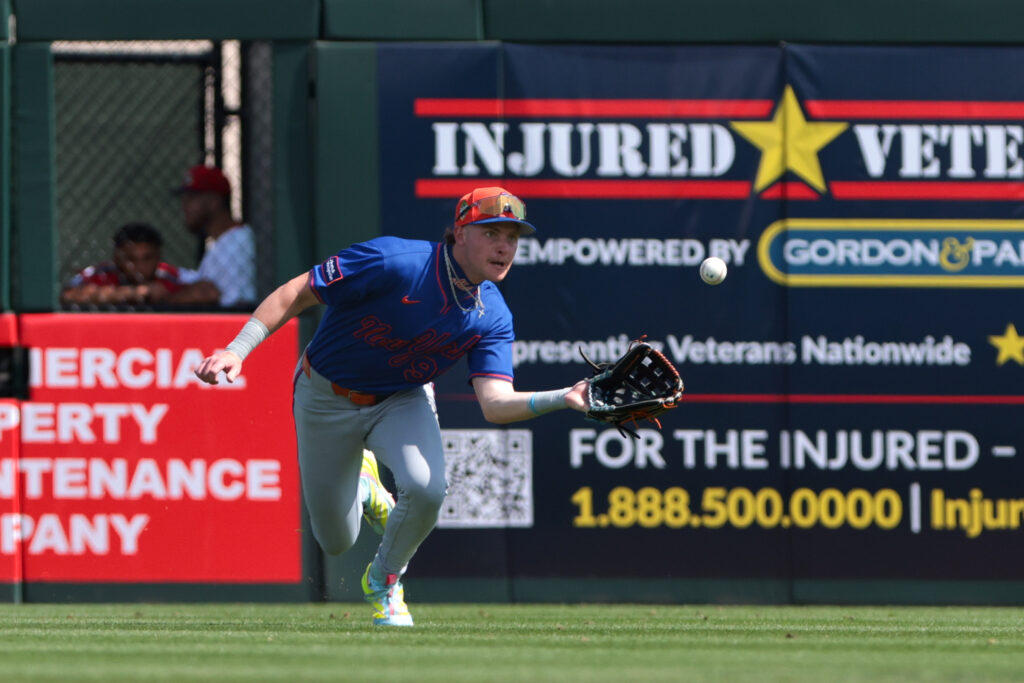
Cody Bellinger’s Contract Comes With Highest Tax Payoff For Yankees First Two Seasons


The Yankees finalized his five-year, $162.5MM contract with Cody Bellinger last week. That would come to an annual average of $32.5MM calculated on the team’s luxury tax ledger. In most cases, the luxury tax number of the contract is derived by dividing the number of guaranteed years from the total sum assured – regardless of how the income is distributed. Open performance bonuses or option awards can change the calculation, but AAV is the starting point.
However, as Joel Sherman of The New York Post reported, Bellinger’s deal falls under the collective bargaining agreement: the “Valley Charge,” as it’s called in the CBA. That only comes into play with a front-loaded contract before the player’s option year or opt-out clause. That applies to Bellinger’s contract, which allows him to opt out after the second or third season. The next few paragraphs will hopefully explain why this is so – although it does require diving into some of the terms and figures and technical terms within CBA. Interested readers will also want to check out this X series courtesy of Ethan Hullihen.
Bellinger’s deal comes with a $20MM signing bonus, which counts as guaranteed money and is paid in full regardless of opting out.* The outfielder will collect $32.5MM in salary over the first two seasons. The deal comes with sequential salaries of $25.8MM, $25.8MM and $25.9MM for the final three years if Bellinger does not opt out. He will make $85MM in the first two seasons and will have his first opt-out with three years remaining and $77.5MM remaining. For CBA purposes, all three years after opting out are considered option years because Bellinger decides whether to stick with the contract.
In order to understand the Valley Charge exception, we will need to bring in some language from the CBA. The principle applies if i basic salary of the player selection year is “less than 80% of base salary … and signing bonus” of the cheapest year before the exit. So it’s not a direct comparison. Salaries for the option years range from $25.8MM – 25.9MM. The years before the exit include both their $32.5MM salaries and $10MM each year in a split signing bonus: the $42.5MM option is less than the three-year value of $50 in total. ($34MM), so they all fall within the Valley Charge.
Once the Valley Charge is implemented, the contract’s comfortable tax distribution changes. Going back to the CBA: “For each option year of such player, i the difference between the player’s option year value and (the 80% value) will be allocated on an average basis over all the years preceding (the opt-out).”
Therefore, we subtract the annual salary options from the $34MM 80% value for the second season. That comes out to $24.5MM ($8.2MM + $8.2MM + $8.1MM). That’s divided between the two seasons prior to the $12.25MM annual exit and added to the original $32.5MM total, bringing the new CBT number to $44.75MM. If Bellinger does not opt out, the Yankees will receive a “credit” in 2028-30 for being overpaid in the first two seasons, meaning they will only account for their CBT book at around $24.33MM per year over the final three years.
RosterResource now projects the Yankees with a tax cap number of more than $330MM in 2026. That’s up from the $320MM end of the season from last year, so it’s unclear how much room ownership will be given in-season guidance.
* The Post’s Jon Heyman reports that the bonus will be paid in $10MM installments on April 1 and August 1 of this year. The player receives his full signing bonus regardless of his decision to opt out. Bellinger’s bonus is early, so that generally doesn’t apply here, but the bonus payment date has no effect on the Valley Charge calculation.